Morning Coffee: The race to be JPMorgan's next CEO might be won (or lost) in Europe. Why you can’t cheat at banking interviews
Rudyard Kipling’s recipe for success was a long list of personal qualities beginning with the ability to “keep your head when all about you are losing theirs and blaming it on you”. Jamie Dimon’s equivalent to “If” doesn’t rhyme, but it’s almost as poetic. For the next CEO of JP Morgan, apparently the following criteria will be considered:
Click here to join the bubble by eFinancialCareers, our new anonymous community. ✍️
“You want to be good at management, you want to be good at people, you want to be analytical, you want to be detailed … You want to be a culture carrier. You want to be curious. You want to have heart. You want to have grit. You want to have soul. You want to have work ethic. You want to be able to travel. You want to be able to walk in operating centers and deal with CEOs and prime ministers. It’s all of that”.
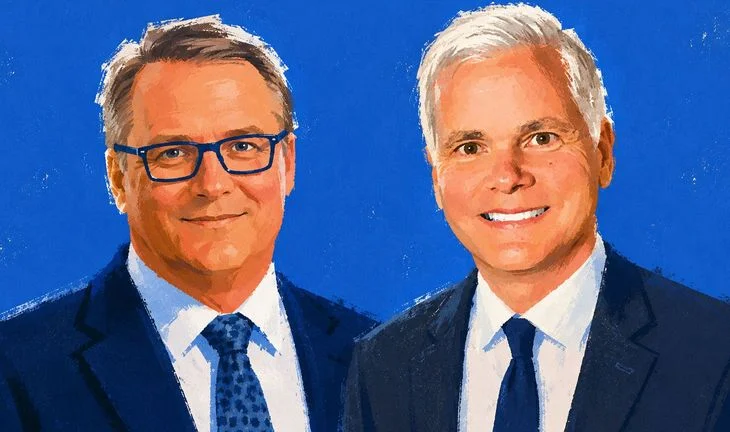
It might not matter for a while. Jamie confirmed the comments made in February that he is going to be CEO “for a few years, plus or minus”, and might stay on as an executive chairman for a while if the board wanted him to. But if he were to be “hit by a truck, which is not my preference”, JPM would be fine because it has two “exceptional co-presidents”. This probably confirms that Troy Rohrbaugh and Doug Petno are the succession front-runners, as does the fact that apparently Marianne Lake’s resignation came “once she knew about the plans” to appoint them.
Rohrbaugh seems to be in the lead; Dimon added that “It’s very important that people have experience across the company” and that if someone is appointed who “only cares about the investment bank” then “the rest of the franchise can suffer”. Petno is a career investment banker and continues to lead the investment bank today, while Rohrbaugh has been rotated into Lake's previous role atop consumer banking.
Dimon’s comments about experience across the bank should probably be taken to mean that they have to be favourable experiences. In that context, his suggestion that he would like to see JPM develop a “great digital bank across Europe” ought to be taken seriously by Troy Rohrbaugh, because that’s a pretty steep challenge, and it’s Rohrbaugh’s job to deliver it now. Which might mean that if Europeans are all carrying Chase cards in two or three years’ time, the job is Rohrbaugh’s for the asking, while if they’re still carrying Revolut cards it’s more likely to go to Petno. Because the most important characteristic of all, if you want to be the chief executive of the world’s biggest bank, is the ability to make a lot of money.
Elsewhere, a lot of employers are apparently beginning to realise that some of the people who seemed really good at interview or who wrote well-argued and apposite cover letters were actually using chatbots to simulate understanding of jobs they were completely unsuited to. Although they’re not all speaking up because “it’s embarrassing to admit you got duped by artificial intelligence”, it seems that as well as convincing an interviewer, people who cheat in this way seem to be able to convince themselves.
It’s noticeable, however, that the jobs in which this seems to be happening are in nonprofits, startups and other areas where the application process might be competitive, but where the hiring process doesn’t really resemble that of banking. Because when you look at the solutions people are proposing to the AI cheating crisis, they all look like things bankers do already.
In order to get your first job in banking, you need to go through an internship process. You might possibly be able to boost your chances at this stage by using AI well, but in order to get an actual offer, you need to impress people face to face over the course of a summer. If you want to get hired at another bank, you’ll usually need to talk to a recruiter, in person, and investment banking recruiters are some of the most difficult people to fool that you will ever meet. And at any level above Vice-President, hiring is usually a matter of personal relationships, where the most important thing people will look at is your actual track record. Basically, the investment banking industry has accidentally created a talent acquisition system which, while certainly far from perfect, seems to be pretty difficult to hack in this particular way.
Meanwhile …
Among the other comments made on the JP Morgan earnings call, CFO Jeremy Barnum suggested that the staff were being discouraged from using expensive frontier models like Claude Opus to carry out mundane tasks like summarising analyst reports. (Bloomberg)
And Jamie Dimon is still determined not to go into politics; when he finally leaves banking, he fancies a go at teaching and might write a book. The last time he had some time off, he took up boxing and playing the guitar – he also talks about some kind of media venture, although probably not the Hollywood screenplay idea he once pitched to the CEO of Disney (Business Insider)
Rothschilds is suffering from the tightness of the talent market. Despite an 8% increase in advisory fees, it saw profits fall 18% because of higher bonus payments. It’s a kind of champagne problem, but someone else is drinking the champagne. (FT)
A lot of American bankers would secretly like to see more regulation of AI, so that they would have some idea of what they might or might not be allowed to do. (American Banker)
Meta allegedly used an AI system to find “unproductive workers” but which didn’t spot that some of them were on medical leave. Another example of how machines’ training data doesn’t always contain enough examples of the uncommon but extremely important cases which make up most of the job of human resources. (NY Post)
An alarming story featuring fintech, SPACs, “a Real Madrid fan with a penchant for luxury watches” and a boat which was meant to be carrying bananas but in fact had 13 tonnes of cocaine. (Bloomberg)
Have a confidential story, tip, or comment you’d like to share? Contact: +44 7537 182250 (SMS, WhatsApp or voicemail). Telegram: @SarahButcher. Signal: sarahbutcher.22 Click here to fill in our anonymous form, or email editortips@efinancialcareers.com.
Bear with us if you leave a comment at the bottom of this article: comments are moderated intermittently by human beings. Sometimes these humans might be asleep, or away from their desks, so it may take a while for your comment to appear. You must take sole responsibility for comments you post on this site. We will take reasonable steps to weed out anything that we consider to be offensive or inappropriate.