Hedge fund executive driving ambulances: "I was missing a deep connection with humanity"
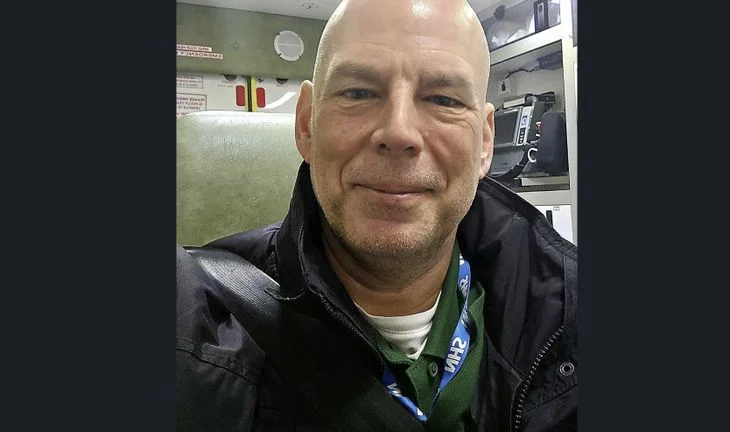
Nick Bushrod is only just attending university. Last year, he embarked upon a degree to become a paramedic at the University of Brighton. Aged 55, Bushrod now drives ambulances in the south of England. It's a big change. For nearly 16 years previously, he worked for GSA Capital, a UK based quantitative hedge fund with over $3bn in AUM.
Get Morning Coffee ☕ in your inbox. Sign up here.
"I found myself in the lucky situation where I was financially secure and could choose a career based on what I wanted to do instead of what would pay the most," says Bushrod, who was on GSA's executive board as the chief of staff. "I love computers, but I also love the human body, which to my mind is the greatest and most elegant system ever designed." He considered medicine, but he'd left it too late to become a doctor. "You can become a paramedic after a three-year course."
Bushrod's days used to involve meetings in Mayfair. Now they involve house visits to people who have sometimes slipped between cracks. "You would be shocked to see the level of poverty," says Bushrod. "It can be earth-shattering - there are houses where there's nothing. No carpet on the floor, no paint on the walls, no food in the fridge. You don't realize the poverty on your doorstep until you see inside people's homes."
Bushrod acknowledges that a former hedge fund executive may seem ill-placed to comment on financial need, but he says the poverty he encounters extends beyond the material. "Plenty of people in finance are well aware that not everyone is lucky enough to have jobs that pay well. But it's not just economic poverty I see. I see poverty of friendship, poverty of hope, poverty of having a social circle. People with nothing, who have no one to talk to when they feel down or lonely."
The role of a paramedic is less visceral than the TV would have people think: "There are a lot of mental health calls, people with chest pains and shortness of breath," says Bushrod. "One of the hardest things that we have to deal with is that we're there for a fleeting moment in time," he says. "We try to give the maximum we can in the time we're with the patient," he adds.
Not every situation can be resolved. There are times when any solution will be imperfect. "I went to see a patient whose wife was confined to bed. He was exhausting and falling over, but we didn't take him to hospital because she would have been left alone."
There are overlaps between Bushrod's new and old lives. Before he was the chief of staff at GSA, Bushrod was a trader at Deutsche Bank. "There's an element of staying calm under pressure, not panicking," he says of the two worlds. There's problem-solving, and there's talking to people and forging human relationships. Working in financial markets and working as a paramedic have skills in common.
The differences, though, are huge. Financial services is about prestige and is a "tournament-based system". Being a paramedic is about people and care. "In the ambulance service, the sense of hierarchy is much, much less prevalent," says Bushrod. "When I meet a patient, they know me by my first name and that's it. What's important is the care I provide in that moment, not my status."
Although he says his time at GSA was very special to him and that the firm contains "some brilliant minds,", Bushrod says he was missing a "deep connection with humanity" in his previous life. Now that he has this, he offers caution to finance professionals who sacrifice everything to work. "Financial services careers are a huge commitment and that takes its toll. Not everyone comes out with their families intact."
As a paramedic and a first responder before that, Bushrod says he's learned the importance of family and of community. "It's easy to take people for granted but when your kids grow up and you're on your own it can be very lonely. We're so hyper-connected digitally and yet we've lost real community."
He also has advice for parents who still ask him what their children should study for a hedge fund job. "I tell them that I have no idea what the future looks like, but teach them to be kind."
Have a confidential story, tip, or comment you’d like to share? Contact: +44 7537 182250 (SMS, WhatsApp or voicemail). Telegram: @SarahButcher. Click here to fill in our anonymous form, or email editortips@efinancialcareers.com. Signal also available.
Bear with us if you leave a comment at the bottom of this article: all our comments are moderated by human beings. Sometimes these humans might be asleep, or away from their desks, so it may take a while for your comment to appear. Eventually it will – unless it’s offensive or libellous (in which case it won’t.)